
FDA Cosmetics Labeling Review
LMG provides comprehensive FDA cosmetics label reviews under 21 CFR Part 701 and MoCRA — ensuring your cosmetic label contains all required elements and meets FDA compliance standards.
Cosmetic Label Review Services
Cosmetic products distributed in the United States must comply with FDA labeling regulations under the Federal Food, Drug, and Cosmetic (FD&C) Act, the Fair Packaging and Labeling Act (FPLA), and — since 2022 — the Modernization of Cosmetics Regulation Act (MoCRA). “Labeling” includes the product label itself and any written, printed, or graphic material accompanying the product. A label that fails to meet these requirements can render a cosmetic misbranded, which carries real consequences at the border and in the market.
Liberty Management Group (LMG) reviews your cosmetic labels in detail, identifies non-compliances, and delivers corrected, ready-to-use, FDA-compliant labels — accurately and efficiently.
What an FDA Cosmetic Label Review Covers
Our regulatory team checks your label against all applicable requirements, including:
- Product identity: The statement of identity must clearly state what the product is, displayed prominently on the principal display panel (PDP).
- Net quantity of contents: Required on the PDP, generally declared in both U.S. customary and metric units.
- Responsible party: The name and place of business of the manufacturer, packer, or distributor.
- Ingredient declaration: A complete ingredient list in descending order of predominance, using the correct ingredient names.
- Color additives: Confirmation that any color additives are FDA-approved and used within their approved conditions.
- Warning and caution statements: Any mandatory warnings (for example, for products in self-pressurized containers, flammable products, or products not safety-tested).
- Claims and marketing language: Review of taglines and claims that could cross the line into “drug” claims.
- Format and placement: Type size, prominence, conspicuousness, and correct placement on the PDP versus the information panel.
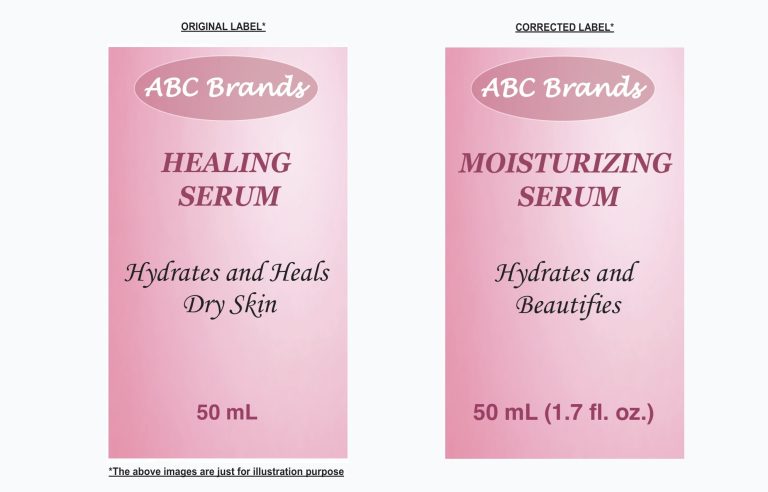
Complete Cosmetic Label Review
Full review of your cosmetic label against 21 CFR Part 701 — identity statement, net quantity, ingredient declaration, manufacturer information, and required warnings.
Learn More
Ingredient Review
Verification that all cosmetic ingredients are declared using the correct nomenclature for cosmetic ingredients in descending order of predominance.
Learn More
Warning Statement Review
Review of all required warning statements — including those required for aerosol products, cosmetics containing certain ingredients, and products with specific use warnings.
Learn More
Cosmetic vs Drug Classification
Determination of whether your product is a cosmetic or an OTC drug — a critical compliance issue that affects labeling requirements, registration, and FDA oversight.
Learn More
How It Works
Frequently Asked Questions
What regulations govern cosmetic labeling?
FDA cosmetic labeling is governed by 21 CFR Part 701 (general labeling), 21 CFR Part 740 (warning labels), and the Fair Packaging and Labeling Act (FPLA). MoCRA also introduced new labeling-related requirements.
Are all ingredient names required on cosmetic labels?
Generally Yes. The FDA requires that all cosmetic ingredients be declared in descending order of predominance by weight.
What is the difference between a cosmetic and a drug label?
Cosmetic labels require an ingredient declaration, identity statement, net quantity, and manufacturer info. Drug labels (including dual-use products) require a drug facts panel with active ingredients, directions, and warnings in a specific format.
How long does a cosmetic label review take?
Standard reviews are completed within 7–10 business days. Expedited review is available for urgent product launches.
Ready to Review Your Cosmetic Label?
Submit your label today for a detailed FDA compliance review from LMG cosmetic regulatory specialists.
Submit for Review View Fees